
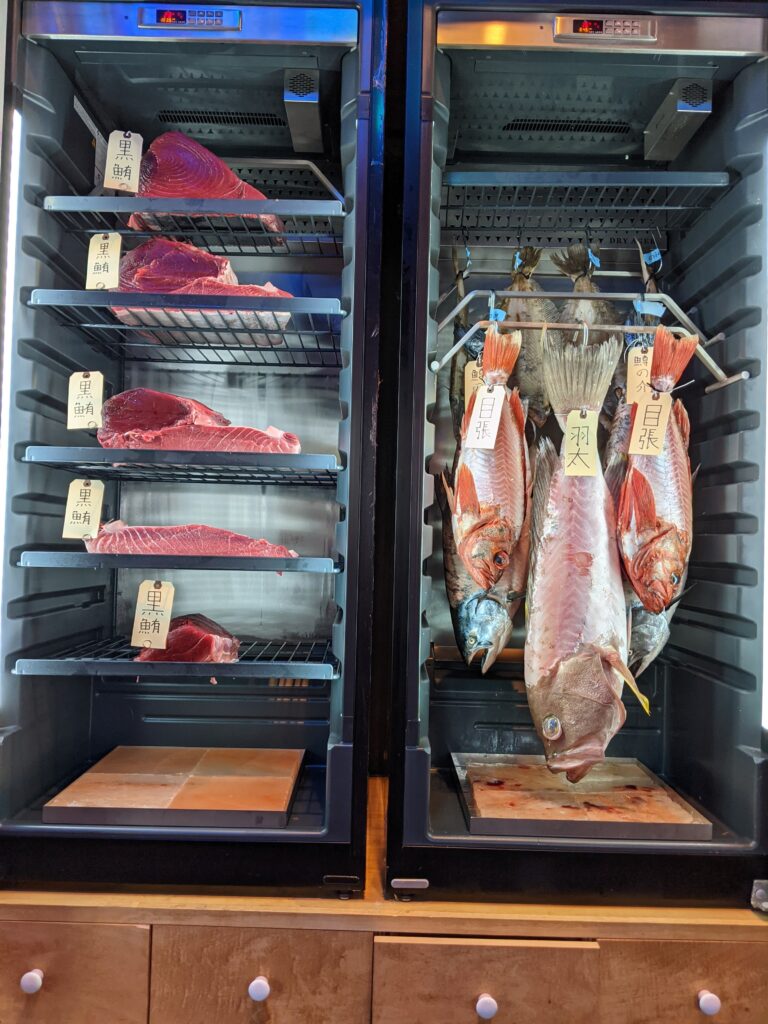
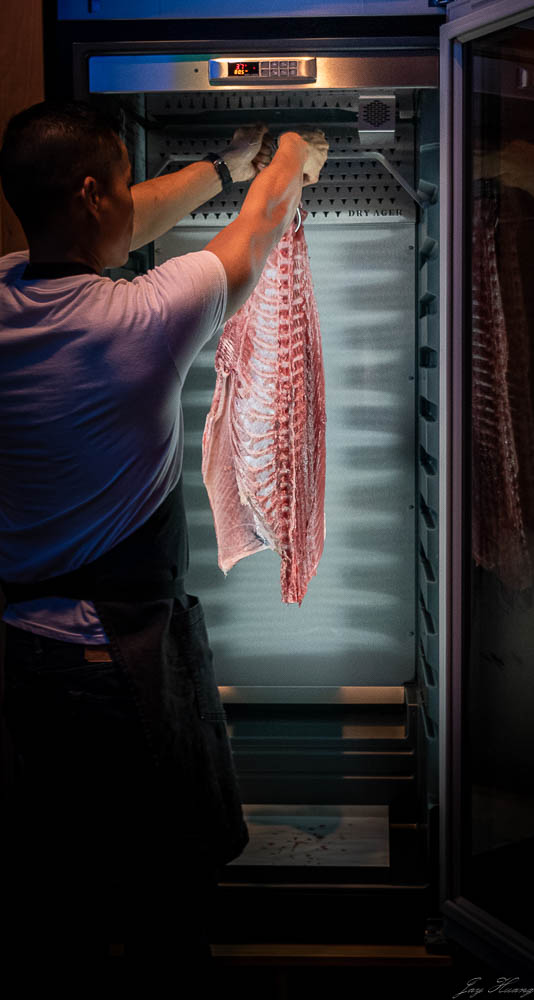
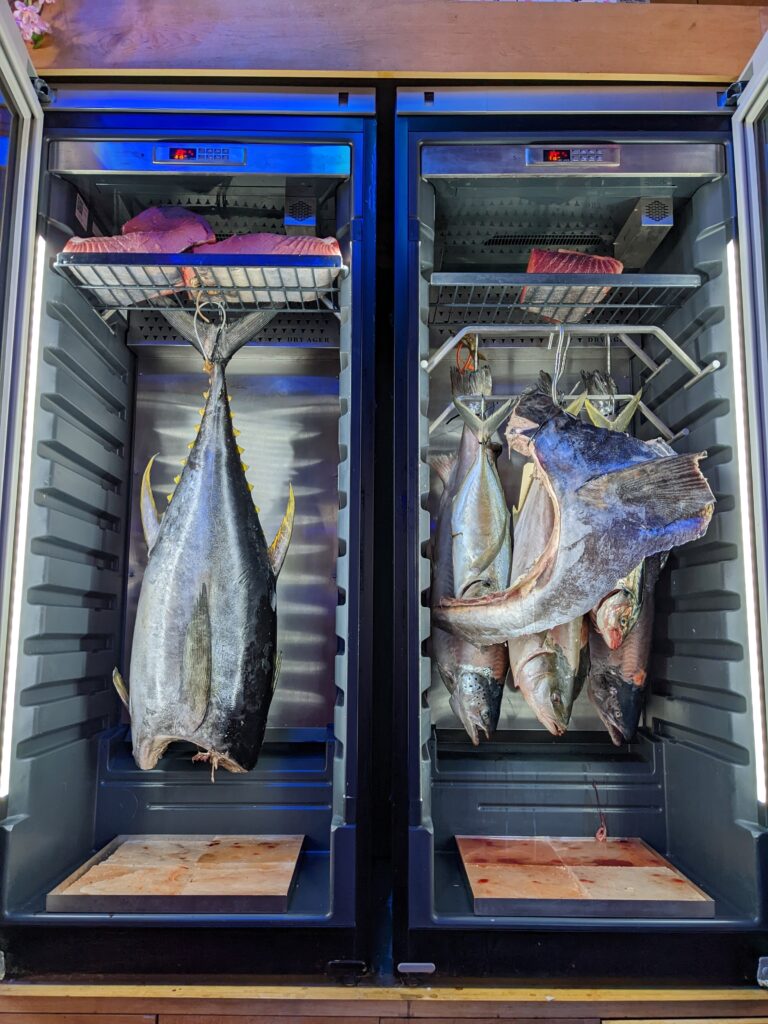
For the past several years, I have been dry aging all our fish at my restaurants for sushi and cooking. Aging fish is a traditional technique used in sushi dating back hundreds of years, however, this has primarily been wet aging. Dry aging has a number of benefits over wet aging that I have outlined below:
FAQ about dry aging
- What temperature do you set your dry ager at? 33.4F or 0.8C
- How long do you dry age your fish? Depends on the fish. Everyfish is different. The bigger and fattier the fish, the longer it can go. The smaller and thinner the fish, the less time it spends aging.
- What kind of dry ager are you using? Dry ager
- What is the salt block for? The salt block helps regulate humidity and congeals any blood that might drip from the fish for easier clean up.
- How often do you clean your dry ager? Everyday
- How do you prepare your fish? All fish is scaled using Sukibiki techique to create a clean barrier between the flesh and air.
Reasons for Dry Aging Fish
Dry aging fish is a technique that enhances the flavor, texture, and overall culinary quality.
Flavor Enhancement
Concentration of Flavors: As moisture evaporates, the flavors become more concentrated, leading to a richer taste.
Enzymatic Activity: During the aging process, natural enzymes break down proteins, resulting in complex flavor compounds.
Texture Improvement
Tenderization: The breakdown of muscle fibers makes the fish more tender, improving its mouthfeel.
Firmness: The drying process can also create a firmer texture, making it easier to handle in culinary preparation.
Preservation
Extends Shelf Life: Dry aging can help preserve the fish by reducing moisture content, making it less susceptible to spoilage.
Flavor Development: It can boost the overall umami of the fish, often sought after in gourmet cooking.
Culinary Appeal
Gourmet Experience: Dry-aged fish is considered a delicacy and adds an upscale touch to dishes, making it appealing in fine dining.
Flavor enhancement and texture can be significant for chefs and seafood enthusiasts.